Cross Country Skiing for Beginners: What You Need to Know
If you’re a downhill skier planning your next ski vacation, you might be looking for ways to mix things up. Cross country skiing, also known as Nordic skiing, offers a rewarding and accessible alternative — or perfect complement — to downhill skiing. This full-body winter activity lets you explore snowy landscapes at your own pace, often on the same trips where you hit the slopes.
In this guide, we’ll cover the basics, how it differs from downhill skiing, the benefits, techniques, gear, and some of the best places in the USA to try it.
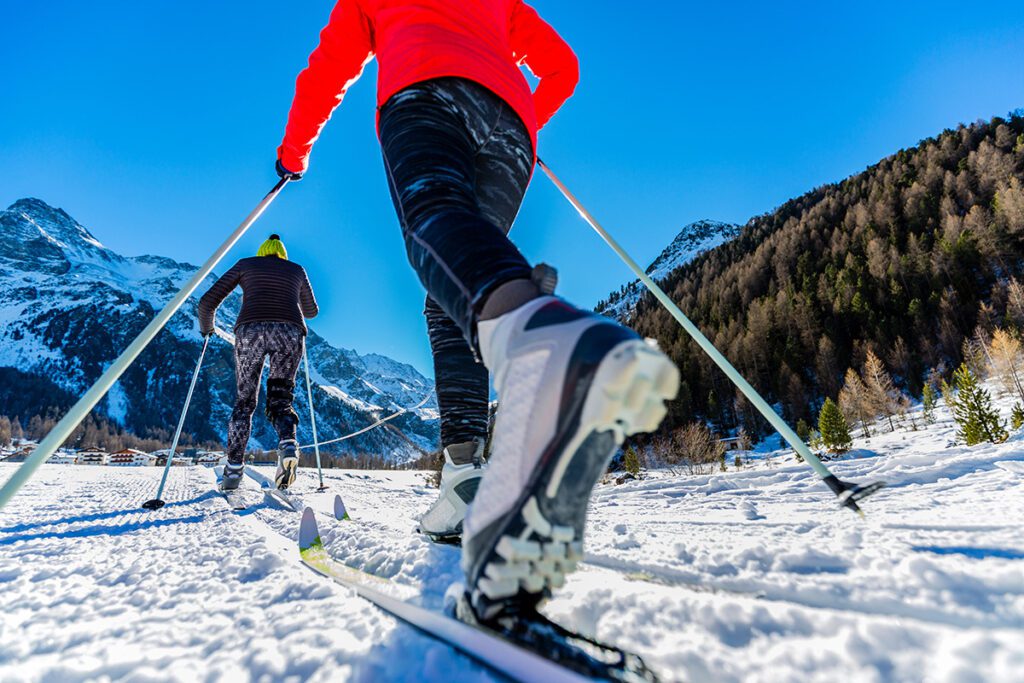
What Is Cross Country Skiing?
Cross country skiing involves propelling yourself across snow-covered terrain using skis and poles. Unlike downhill skiing, where gravity does most of the work, cross country skiing relies on your own power to move forward on relatively flat or gently rolling trails. These trails are often groomed for smooth gliding, though backcountry options exist for more adventure.
The sport originated in Scandinavia as a practical way to travel in winter and has evolved into a popular recreational and competitive activity worldwide. Today, cross country skiing appeals to all ages and fitness levels, making it an excellent option for families or anyone wanting a versatile winter workout.
Cross Country Skiing vs. Downhill Skiing
Many downhill skiers discover cross country skiing as a refreshing change of pace. Here’s how the two compare.
Terrain and Pace
Downhill skiing focuses on steep slopes, high speeds (often 20-40 mph or more), and lift-assisted runs. Cross country skiing, by contrast, takes place on gentler terrain — flat meadows, rolling hills, or scenic loops — at a more relaxed 7-10 mph. The emphasis is on endurance and rhythm rather than adrenaline rushes.
Equipment
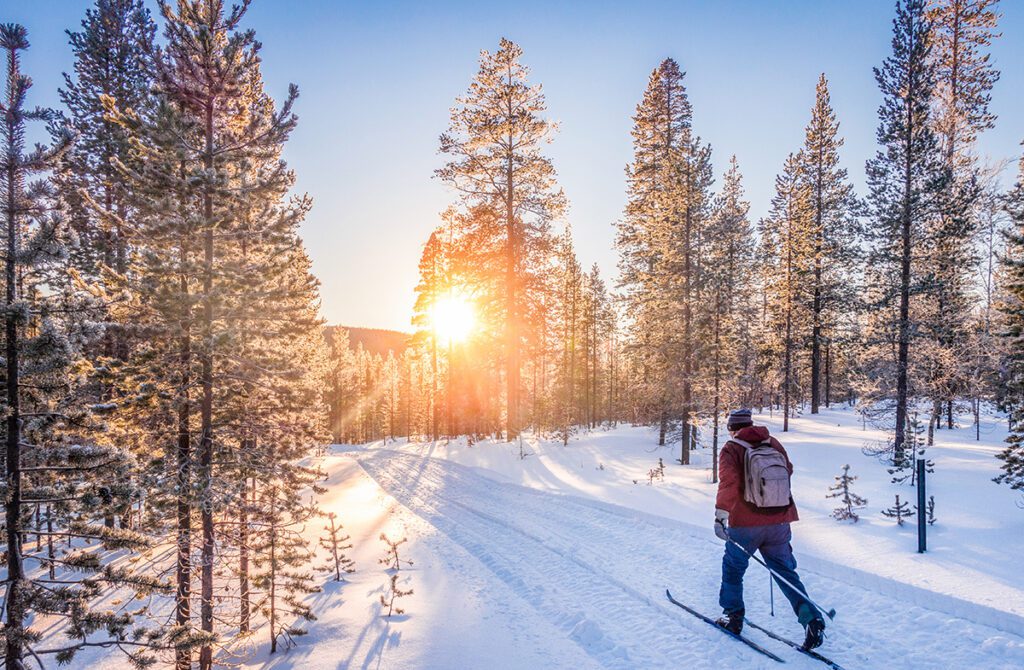
Downhill gear includes wider, shorter skis with metal edges, rigid boots locked at both heel and toe, and protective items like helmets. Cross country skiing uses longer, narrower skis designed for glide, with boots that flex at the toe for a natural walking motion (heel free to lift). Poles are longer and lighter to help with propulsion.
Physical Experience
Downhill skiing delivers short, intense bursts of effort with higher risk of twists or falls impacting knees and joints. Cross country skiing provides a smooth, low-impact aerobic workout that engages nearly every muscle group without the same jarring forces.
Cost and Accessibility
Lift tickets and resort access can make downhill skiing pricey and crowded. Cross country skiing typically requires only affordable trail passes (or none at all on public lands), offering quieter trails and easier entry for beginners.
These differences make cross country skiing ideal for rest days during a downhill-focused ski vacation or as cross-training to build stamina.
Why Downhill Skiers Should Try It
Cross country skiing stands out as one of the most efficient full-body workouts available in winter sports. It burns more calories than many activities while being gentle on the joints — perfect for recovery after intense downhill days.
The serene environment provides a deep connection to nature: quiet trails winding through forests, chances to spot wildlife, and breathtaking winter views without the noise of lifts or crowds. Many find the repetitive glide meditative, offering mental clarity and stress relief.
For downhill skiers specifically, adding cross country skiing improves overall endurance, balance, and leg strength, which translates to better performance on the slopes. It’s also inclusive — great for non-skiers in your group, younger kids, or days when weather limits lift operations. Best of all, you can often do both at the same resort, switching activities seamlessly on your ski vacation.
Types of Cross Country Skiing
There are two main styles to choose from, depending on your preferences and fitness level.
Classic Style
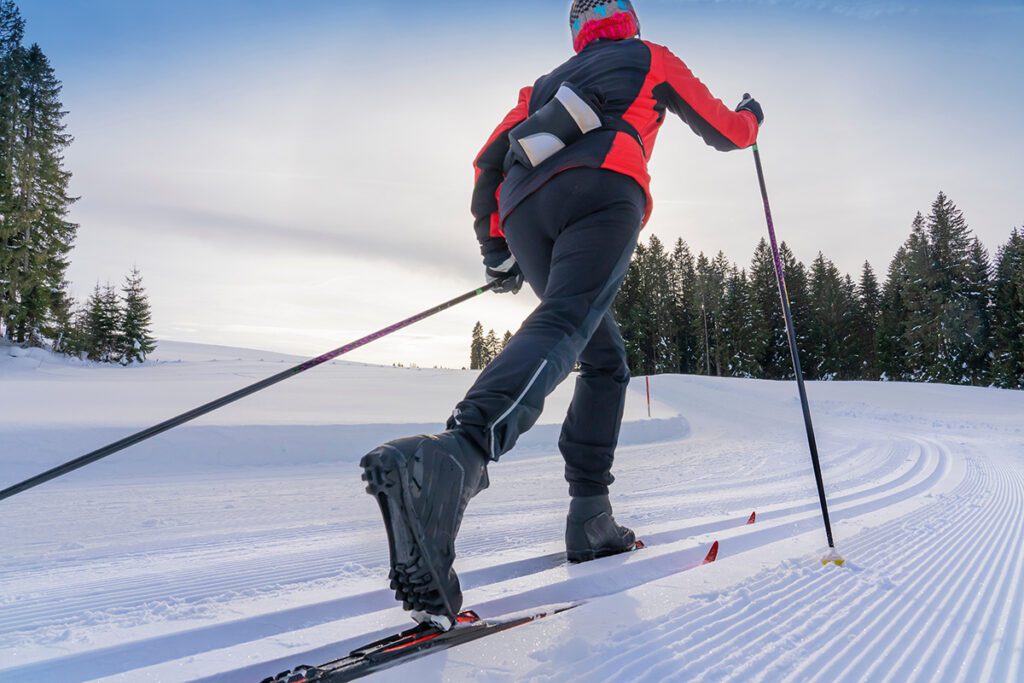
This is the traditional technique, where you stride forward in parallel groomed tracks using a “kick and glide” motion. It’s intuitive for beginners, similar to walking, and works well on varied terrain.
Skate Skiing
A faster, more dynamic style that resembles ice skating—you push off one ski at an angle on a wide, groomed surface. It requires more power and balance but delivers higher speeds and an intense workout.
Most newcomers start with classic cross country skiing, then progress to skate if they enjoy the sport.
Getting Started
Trying cross country skiing doesn’t require much upfront investment—many centers offer rentals and lessons.
Essential Gear
Start by renting: skis, boots, bindings, and poles sized to your height and style. Opt for waxless skis if you’re new, as they provide grip without maintenance. Dress in layers: a moisture-wicking base, insulating mid-layer, and breathable outer shell. Don’t forget gloves, a hat, and sunglasses for glare off the snow.
Basic Techniques for Beginners
In classic style, focus on the diagonal stride: kick one ski forward while pushing with the opposite pole, then glide. Shift your weight fully to the gliding ski for efficiency. On gentle downhills, bend your knees, lean slightly forward, and use a snowplow position to control speed.
Practice balance by poling without skis first. Stopping is simple — step out of tracks or herringbone uphill if needed.
Tips for Success
Book a lesson at a Nordic center; instructors accelerate learning and prevent bad habits. Begin on easy, groomed flats to build confidence. Follow trail etiquette: stay in set tracks for classic, yield to faster skiers, and pass on the left. For safety, check avalanche reports in backcountry areas, ski with a partner, and monitor weather.
Best Cross Country Ski Resorts in the USA
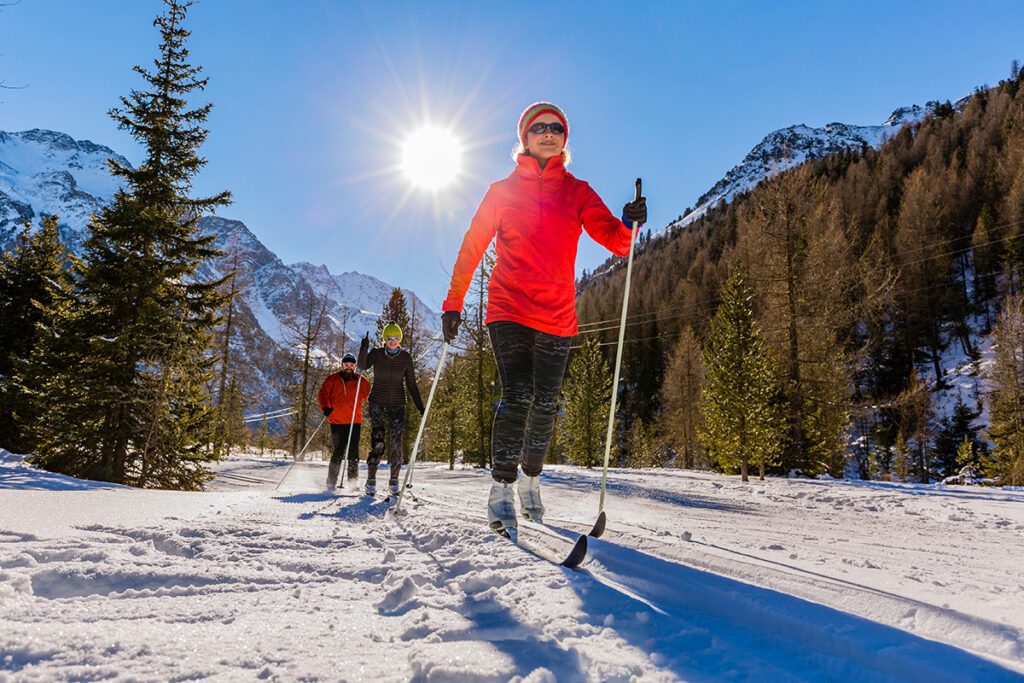
Many top downhill destinations also feature outstanding cross country skiing facilities, making it easy to combine both on one trip. Here are 8 of the best Nordic centers across the country:
- Methow Trails (Winthrop, WA) – Boasting over 120 miles of groomed trails, this is the largest network in North America, with stunning Cascade Mountain scenery.
- Devil’s Thumb Ranch (Tabernash, CO) – More than 75 miles of trails through Rocky Mountain valleys, known for excellent grooming and high-end amenities.
- Royal Gorge (Soda Springs, CA) – North America’s largest cross country resort with 140 km of trails near Lake Tahoe, offering terrain for all levels.
- Lone Mountain Ranch (Big Sky, MT) – Over 50 miles of nationally ranked trails in a luxurious ranch setting. View Big Ski ski deals
- Trapp Family Lodge (Stowe, VT) – Historic lodge with more than 60 km of groomed and backcountry trails in Vermont’s Green Mountains. View Stowe ski deals
- Bretton Woods Nordic Center (Bretton Woods, NH) – 100 km of trails with panoramic White Mountain views. View Bretton Woods ski deals
- Jackson Ski Touring Center (Jackson, NH) – Extensive 150+ km network, family-friendly with easy access to village charm.
- Maplelag Resort (Callaway, MN) – A Midwest standout with 70 km of trails and cozy lakeside lodging.
Many of these spots sit alongside popular downhill resorts, so you can downhill one day and explore cross country the next.
Final Thoughts
Cross country skiing provides a peaceful, healthy way to experience winter — one that complements downhill skiing beautifully. Whether you’re after fitness gains, nature immersion, or simply a change of pace on your ski vacation, it’s worth trying. Start small on groomed trails, and you might find yourself hooked on the glide.
To save on lift tickets, lodging, rentals, activities, and more for your next trip — including resorts with great cross country trails — browse our current ski deals.
Related Blogs
Looking to branch out and make your vacation truly one of a kind? Check out these related blog posts for more ideas on how to make you ski getaway sparkle!