The Most Influential Figures in Skiing History
Skiing history is a story of innovation, courage, competition, and culture. What began as a practical means of winter travel in snowy regions evolved into one of the world’s most dynamic mountain sports. Across centuries, pioneers refined technique, racers pushed the limits of speed, and freestyle athletes reinvented what was possible in the air. At the same time, filmmakers and entrepreneurs helped transform skiing into a global industry and lifestyle.
To understand skiing history is to understand the individuals who shaped it. The following athletes, innovators, and visionaries didn’t just win medals — they altered the trajectory of skiing history itself.
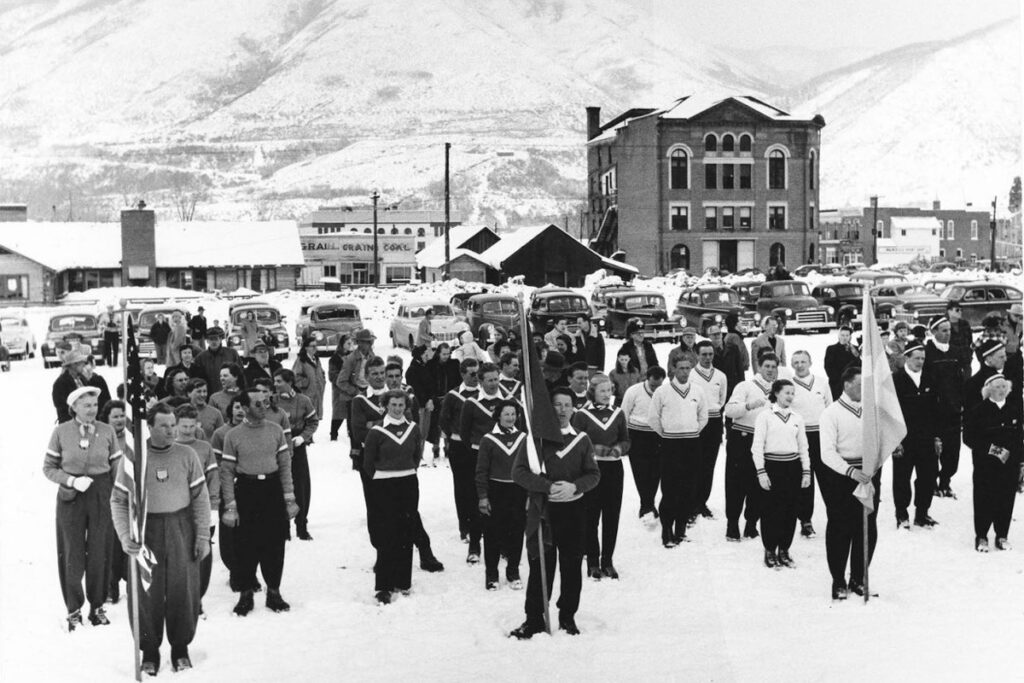
1. Dick Durrance: American Skiing’s Early Ambassador
Dick Durrance (1914–2004) played a pivotal role in transplanting elite skiing to America and advancing skiing history stateside. A dominant U.S. racer with 17 national titles, he competed credibly against Europeans at the 1936 Olympics and excelled at Sun Valley. Post-WWII, after training troops at Alta, Durrance took over Aspen’s struggling ski area in 1947. His masterstroke: securing the 1950 FIS World Championships for Aspen—the first outside Europe—elevating the resort and igniting Colorado’s ski boom. As a filmmaker, photographer, and promoter, he captured skiing’s allure and embodied American ingenuity in skiing history. Durrance’s efforts professionalized U.S. racing, grew tourism, and proved Americans could lead on the world stage.
2. Sondre Norheim: Father of Modern Skiing
Sondre Norheim (1825–1897), born in Telemark, Norway, is widely regarded as the foundational figure in skiing history. Often called the “father of modern skiing,” he transformed practical winter travel into an enjoyable sport. Norheim crafted early skis with sidecut and camber for better control, then invented the flexible heel strap binding using birch roots—enabling turns, jumps, and the Telemark technique that bears his region’s name. In 1868, he won the first organized ski jumping contest and demonstrated advanced maneuvers in Oslo exhibitions. His innovations influenced slalom racing, parallel turns, and equipment standards that persist in skiing history. Emigrating to the U.S. later in life, Norheim’s legacy as skiing history’s original pioneer lives on in telemark skiing and every carved turn today.
3. Hannes Schneider: Architect of Alpine Technique
Hannes Schneider (1890–1955) stands as a cornerstone in skiing history for developing the Arlberg technique that standardized alpine skiing instruction worldwide. From Austria’s Arlberg region, Schneider pioneered a forward-leaning, crouched stance ideal for steep terrain, replacing rigid Nordic postures. He systematized the snowplow, stem turns, and stem Christie—steps toward parallel skiing—through his St. Anton ski school (founded 1921) and influential films like The White Ecstasy. Schneider trained military units, co-created the Arlberg-Kandahar races (early World Cup precursors), and fled Nazi persecution to establish ski schools in the U.S. His methodical approach professionalized teaching, boosted safety, and spread skiing globally, making him one of the most transformative figures in skiing history.
4. Jean-Claude Killy: The 1960s Triple Crown King
Jean-Claude Killy (b. 1943) etched his name deeply into skiing history with unparalleled dominance in the late 1960s. The charismatic Frenchman swept gold in downhill, giant slalom, and slalom at the 1968 Grenoble Olympics—the second man ever to achieve the alpine triple crown. He claimed the first two World Cup overall titles (1967–68) and won 12 of 17 races in 1967. Killy’s explosive, accelerating style and innovative starting technique influenced racers for decades. Retiring young, he pursued films, racing, business, and IOC roles while amplifying skiing’s glamour. In skiing history, Killy’s perfect sweep, personality, and professional impact turned the sport into mainstream entertainment and national pride.
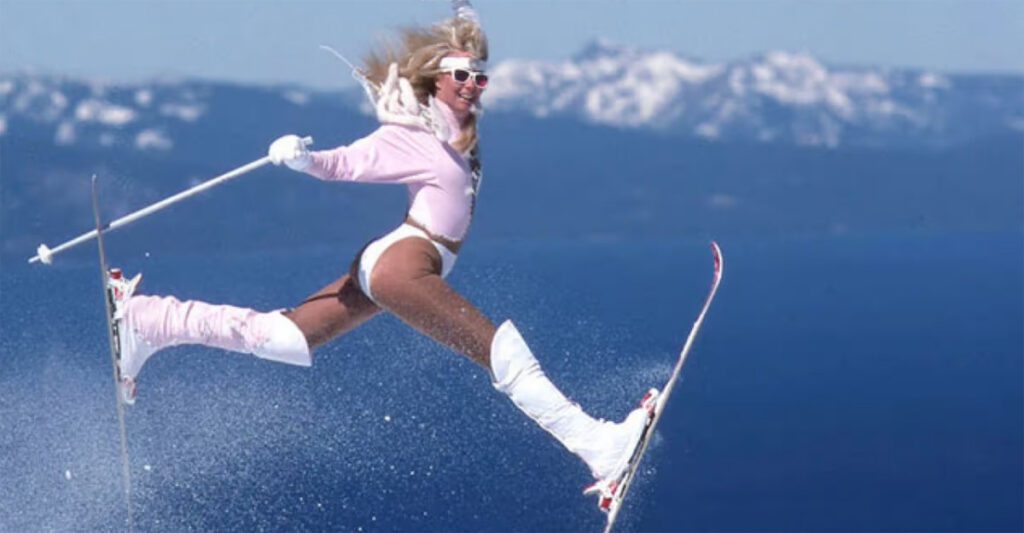
5. Suzy Chaffee: Mother of Hotdog Freestyle and Women’s Advocate
Suzy Chaffee (b. 1946), known as “Suzy Chapstick,” revolutionized skiing history by bridging alpine racing and freestyle while championing gender equity. As 1968 U.S. Olympic alpine team captain, she shifted to “hotdog” freestyle, winning world titles (1971–73) with innovative ballet, aerials, and music-synchronized moves that defined the emerging discipline. Chaffee lobbied the U.S. Olympic Committee to include freestyle events (moguls, aerials, ballet), paving the way for women’s Olympic success from 1992 onward. As a model and spokesperson, she popularized skiing among women and youth. Her advocacy for inclusivity, including Indigenous athletes, expanded skiing history’s reach and cultural impact far beyond traditional racing.
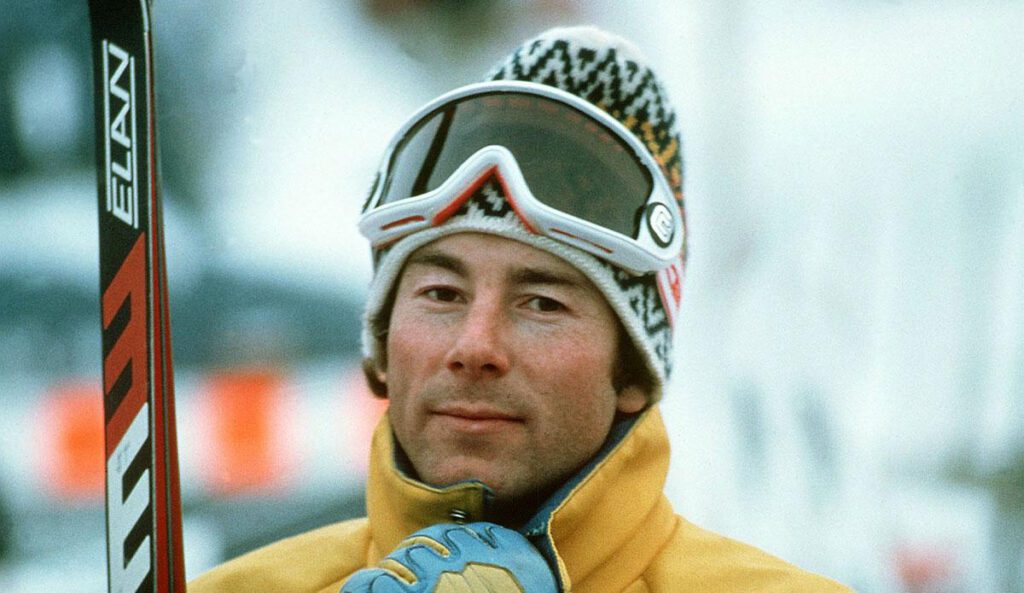
6. Ingmar Stenmark: The Technical Maestro
Ingmar Stenmark (b. 1956) holds an unmatched place in skiing history as the king of technical alpine events. The Swedish legend amassed a record 86 World Cup wins (46 giant slalom, 40 slalom), eight discipline titles in each, and three overall crowns (1976–78). He claimed double gold at the 1980 Olympics in slalom and giant slalom. Stenmark’s precise, efficient technique and composure under pressure set benchmarks for technical skiing that endured for decades—his win total stood until Mikaela Shiffrin surpassed it in 2023. Rarely racing speed events, he proved specialization’s power. In skiing history, Stenmark represents elegance, consistency, and the pinnacle of slalom/giant slalom mastery.
7. Alberto Tomba: “La Bomba” – Charisma Meets Dominance
Alberto Tomba (b. 1966), dubbed “Tomba la Bomba,” infused skiing history with rock-star energy during the 1980s–90s. The powerful Italian secured three Olympic golds (1988 slalom/GS, 1992 GS) and became the first alpine skier to medal across three Olympics. With 50 World Cup victories, mostly technical, his aggressive style packed stadiums. Tomba’s curly-haired, charismatic persona—parties, films, endorsements—made skiing a cultural spectacle in Italy and beyond. Retiring in 1998, he remains an ambassador. In skiing history, Tomba demonstrated how elite performance combined with showmanship could elevate the sport’s popularity and entertainment value.
8. Jake Burton Carpenter: The Godfather of Snowboarding
Jake Burton Carpenter (1954–2019) fundamentally expanded skiing history by creating and mainstreaming snowboarding. Inspired by the Snurfer, he founded Burton Snowboards in 1977, iterating designs with edges, bases, and bindings despite widespread resort bans. Jake’s advocacy opened slopes to snowboarders, pioneered halfpipes and parks, and built a lifestyle brand. Snowboarding’s 1998 Olympic debut owes much to his persistence. Innovations like women’s gear broadened participation. In skiing history, Burton’s vision grew snowboarding from fringe to millions of riders, influencing freestyle skiing and establishing the modern winter-sports ecosystem.
9. Lindsey Vonn: Queen of Speed and Barrier Breaker
Lindsey Vonn (b. 1984) secured her spot among the giants of skiing history with unmatched speed-event success. America’s most decorated female alpine skier claimed 82 World Cup wins (record 43 downhills), four overall titles, 2010 Olympic downhill gold, and multiple world championship medals. Overcoming injuries, her fearless style elevated U.S. women’s skiing globally. As a celebrity endorser and mental-health advocate, Vonn boosted visibility and equity in prize money/media. In skiing history, her records, resilience, and mainstream appeal helped narrow gender gaps and inspire future generations.
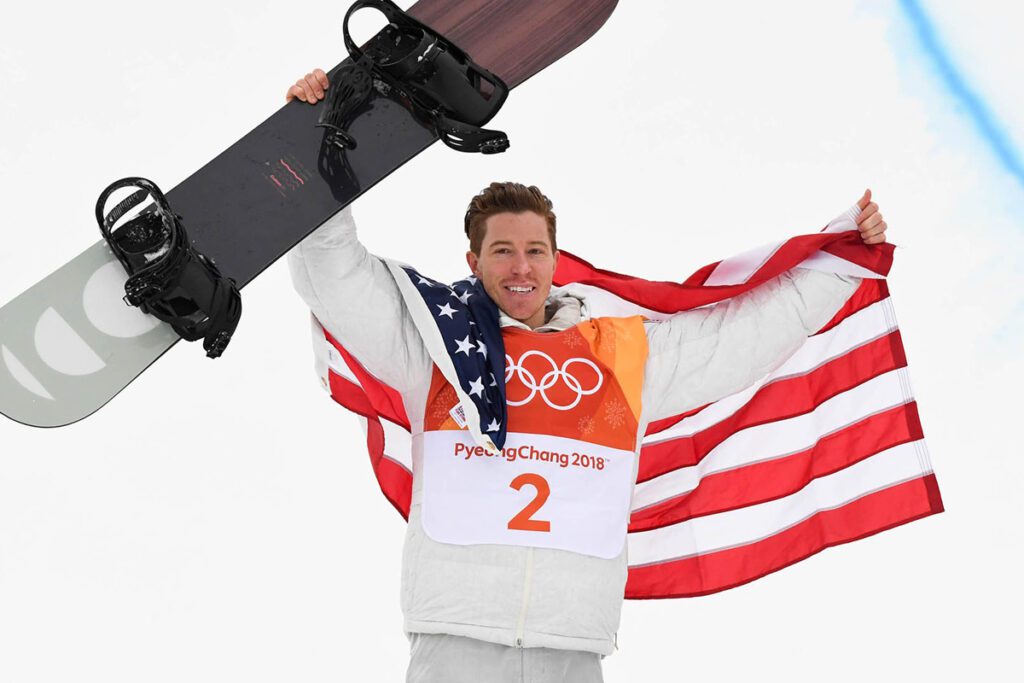
10. Shaun White: The Flying Tomato Who Globalized Snowboarding
Shaun White (b. 1986) transformed snowboarding—and by extension skiing history—into a global superstar spectacle. Winning three Olympic halfpipe golds (2006, 2010, 2018) plus 13 X Games titles, the “Flying Tomato” delivered massive airs and technical innovation with unmatched showmanship. He founded Air + Style, launched brands, and in recent years created the Snow League to professionalize snowboarding/freeskiing. White’s crossover appeal filled arenas, drew TV audiences, and ensured snowboarding’s Olympic future. In skiing history, his charisma and achievements turned a niche activity into mainstream culture, inspiring youth worldwide.
Why These Figures Matter in Skiing History
Skiing history is not defined by a single discipline or generation. It spans Nordic innovation, alpine dominance, freestyle creativity, big-mountain exploration, and snowboard culture. The individuals above shaped skiing history through technique, competition, advocacy, design, and storytelling.
From Sondre Norheim’s foundational turns to the global spectacle influenced by Shaun White, skiing history reflects continuous evolution. Each era builds upon the last, and today’s athletes carve new chapters atop foundations laid by these pioneers.
Skiing history remains alive every winter — written in race courses, backcountry lines, terrain parks, and film screens around the world.