Skiing Exercises You Can Do at Home
Proper preparation is one of the best ways to enjoy skiing more and stay safer on the slopes. Skiing exercises you can do at home help build the strength, endurance, balance, and mobility your body needs for confident turns, longer runs, and fewer injuries. The demands of skiing—sustained leg burn, quick directional changes, core control, and stability on uneven terrain—can be trained effectively without ever leaving your living room.
These skiing exercises require little or no equipment, making them accessible for beginners through advanced skiers. They target the key muscle groups used on the mountain: quads, glutes, hamstrings, calves, core, and stabilizing muscles in the hips and ankles. Performing them consistently throughout the year will improve your performance and help you feel stronger from the first run of the season.
In this post, you’ll find eight practical skiing exercises you can do at home, complete with step-by-step instructions, variations, and explanations of how each one translates to better skiing. Start incorporating these skiing exercises into your routine today to build a solid foundation for the slopes.
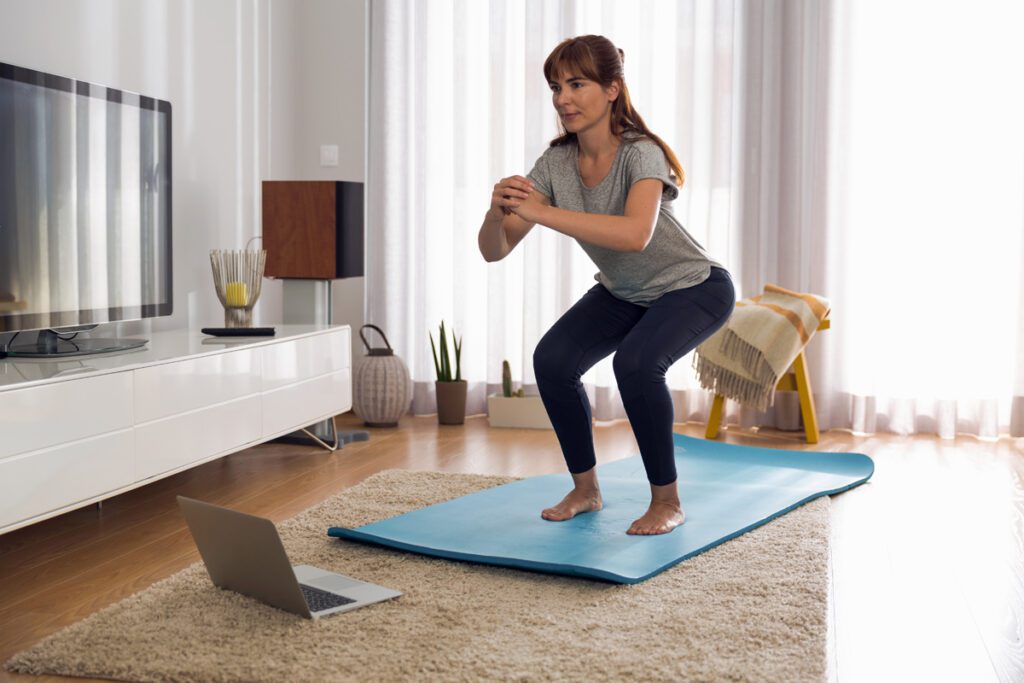
Squats
Squats are among the most effective skiing exercises because they directly strengthen the quads, glutes, and hamstrings—the primary muscles that power turns and absorb shock during descents.
Stand with your feet shoulder-width apart, toes pointing slightly outward. Engage your core, then push your hips back as if sitting into an invisible chair. Lower until your thighs are parallel to the floor (or as low as comfortable while maintaining good form), keeping your chest up and knees tracking over your toes. Drive through your heels to return to standing.
Perform 3 sets of 10–15 repetitions. For added challenge, try jump squats (explosive upward movement) or hold dumbbells or a backpack for resistance.
Focus on controlled movement and proper alignment to get the most benefit from this foundational skiing exercise.
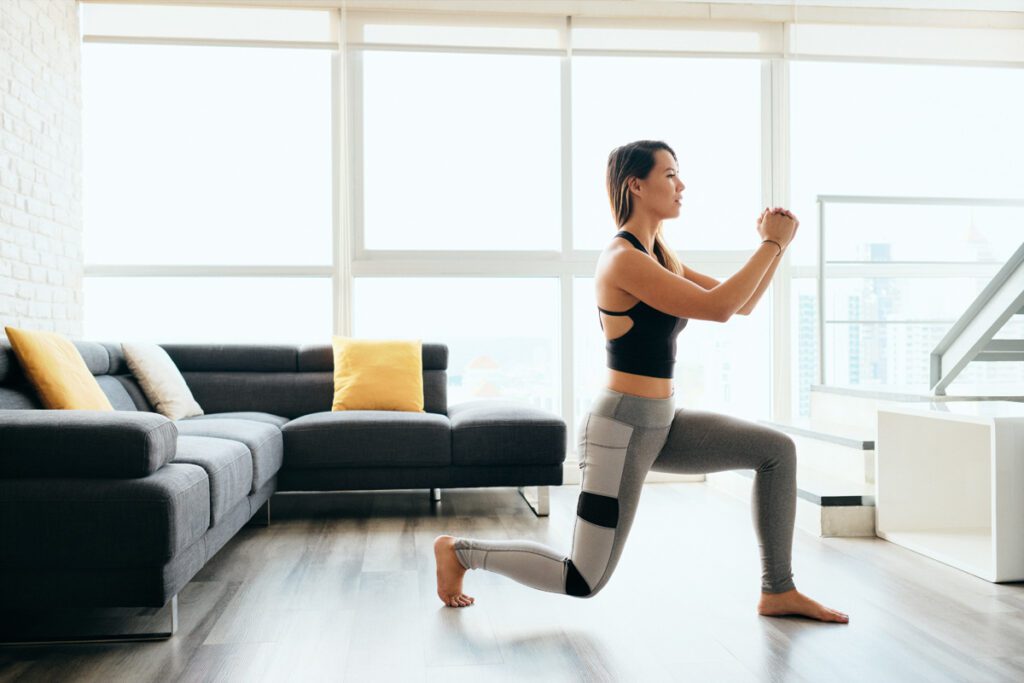
Lunges
Lunges mimic the forward weight shift and single-leg loading that happen constantly while skiing, making them excellent skiing exercises for building unilateral strength and coordination.
Step forward with one foot, lowering your body until both knees form roughly 90-degree angles. Your front knee should stay directly above your ankle, and your back knee should hover just above the floor. Push through your front heel to return to standing, then step forward with the opposite leg to continue alternating.
Aim for 3 sets of 10–12 lunges per leg. Variations include reverse lunges (stepping backward) for less knee stress or walking lunges to add a cardio element.
Lunges strengthen the glutes and quads for powerful edge transitions, improve balance for handling moguls or variable snow, and train each leg independently—crucial since skiing rarely loads both legs equally.
Wall Sits
Wall sits replicate the sustained “seated” position skiers hold during turns and straight-line speed sections, making them one of the best isometric skiing exercises for building thigh and glute stamina.
Lean your back against a sturdy wall and slide down until your knees are bent at approximately 90 degrees, as if sitting in an invisible chair. Keep your feet flat on the floor, hip-width apart, and hold the position while maintaining a neutral spine.
Hold for 30–60 seconds (or as long as possible with good form), then stand up and rest. Repeat for 3–5 rounds. For progression, try single-leg wall sits or lift one foot slightly off the ground.
This simple skiing exercise dramatically improves muscular endurance, helping you stay comfortable through long, continuous runs and reducing the “burn” that often ends a day early.
Planks
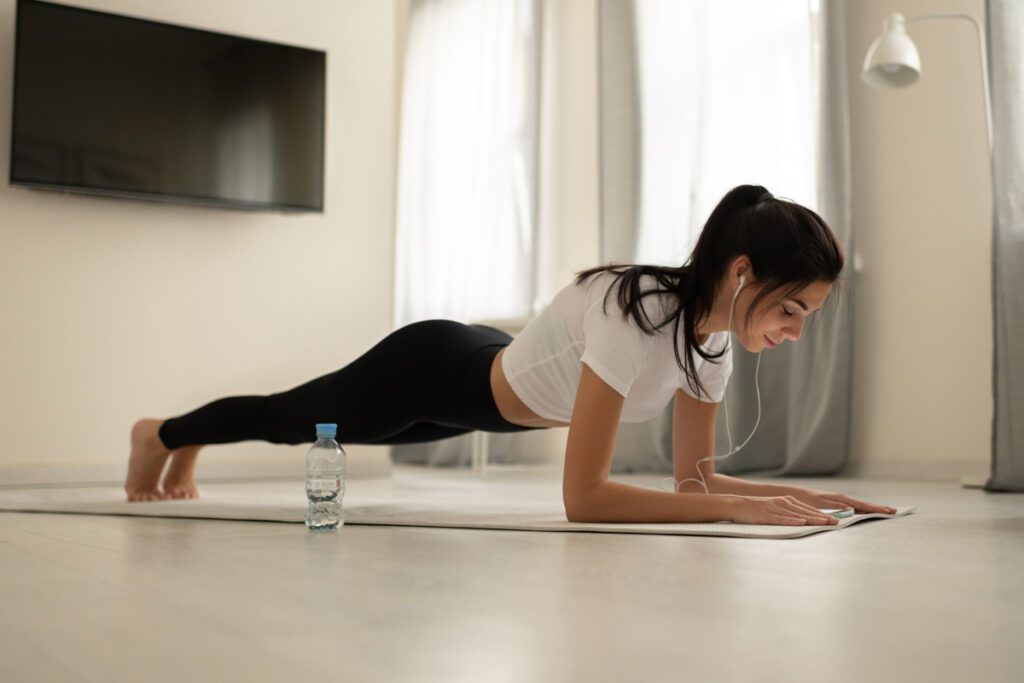
A strong core is essential for maintaining posture, absorbing bumps, and controlling your upper body while your legs do the work. Planks are among the most valuable skiing exercises for developing that stability.
Start in a forearm plank position: elbows directly under shoulders, body forming a straight line from head to heels. Engage your core, glutes, and quads to prevent your hips from sagging or piking upward. Hold the position while breathing steadily.
Aim for 3 holds of 20–60 seconds each. Progress by trying side planks to target obliques or adding alternating leg lifts for extra challenge.
Calf Raises
Strong calves and ankles provide better edge control and help absorb shock in ski boots. Calf raises are simple yet highly effective skiing exercises for this area.
Stand with feet hip-width apart, holding onto a wall or chair for balance if needed. Slowly rise onto the balls of your feet, lifting your heels as high as possible, then lower back down with control.
Perform 3 sets of 15–20 repetitions. For more difficulty, do single-leg calf raises or perform them on the edge of a step so your heels drop below the level of the step.
These skiing exercises strengthen the posterior chain, improve ankle stability for precise edging, and help prevent strains during aggressive turns or landings from small jumps.
Russian Twists
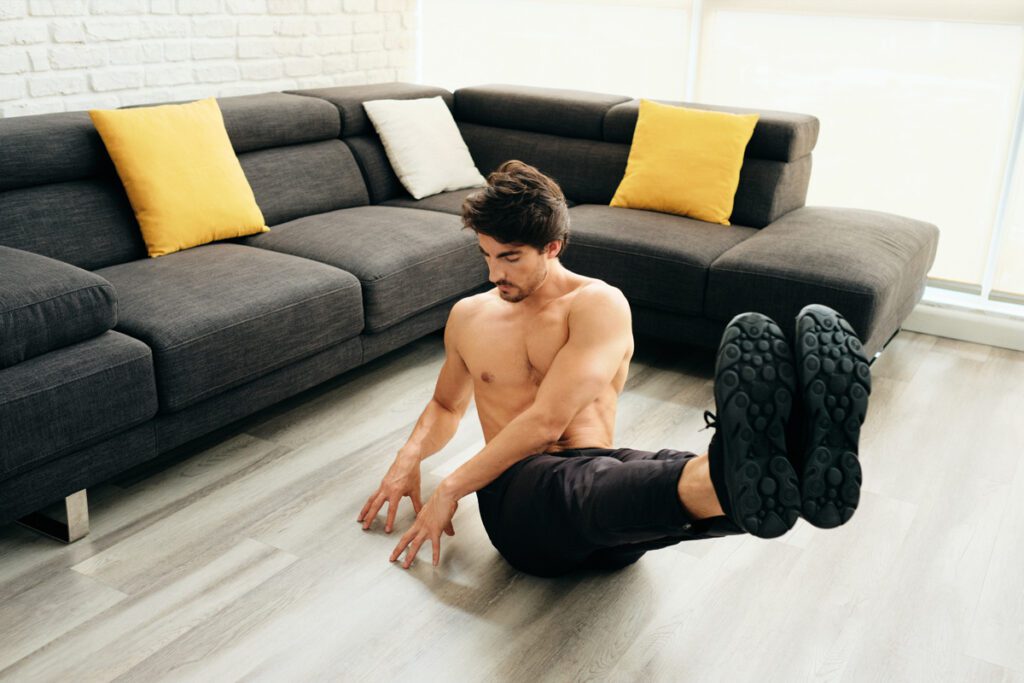
Skiing requires quick rotational movements, especially when making short-radius turns or navigating trees. Russian twists are excellent skiing exercises for developing oblique power and torso mobility.
Sit on the floor with knees bent and feet flat (or lifted for more challenge). Lean back slightly while keeping your spine straight, then clasp your hands or hold a light weight. Rotate your torso to one side, bringing your hands toward the floor beside your hip, then twist to the opposite side.
Complete 3 sets of 20 total twists (10 per side). For added resistance, use a medicine ball or water bottle.
Leg Swings
Good hip mobility allows for fluid leg movements and reduces the risk of strains. Leg swings are gentle yet effective skiing exercises for increasing range of motion.
Stand next to a wall or chair for support. Keeping your core engaged and posture tall, swing one leg forward and back in a controlled arc, then switch to side-to-side swings. Move smoothly rather than forcefully.
Do 3 sets of 10–12 swings in each direction per leg. Increase speed gradually or add a light resistance band around the ankle for progression.
These mobility-focused skiing exercises loosen the hips, improve stride length in turns, and prepare your body for the dynamic range of motion required on varied terrain.
Single-Leg Stands
Balance is one of the most transferable skills from home training to the slopes. Single-leg stands are straightforward skiing exercises that sharpen proprioception and ankle stability.
Stand tall on one leg with a slight bend in the knee. Keep your hips level and gaze forward. Hold for 30–60 seconds, then switch legs. For added difficulty, close your eyes, stand on a folded towel, or add small arm movements.
Perform 3 sets per leg. Consistency with this skiing exercise dramatically improves your ability to stay centered over your skis on uneven snow, ice, or moguls.
How to Start Training
Incorporating these skiing exercises into your weekly routine will help you develop the strength, endurance, balance, and mobility needed to ski better and longer. Start with 2–3 sessions per week, focusing on proper form, and gradually increase intensity or volume. Year-round consistency with these home-based skiing exercises leads to noticeable improvements in confidence and enjoyment every time you hit the mountain.
Related Blogs
Looking for more? We have you covered! Check out these related blogs below.